Jenna Jackson
What is the best form of humanitarian communication to engage the global north with the realities of Ethiopia?
NGOs have often portrayed Ethiopia as a country that is in suffering. “Negative images such as wars, famine and hunger, dirt, poverty, diseases, etc dominate in most analyses and media coverages of Africa” (Ponican 2015). These images induce feelings of pity and guilt. Yet, this is criticised and the rise of positive imagery through sharing of success stories are also used. For example, the use of photography as art showing people celebrating gives people a sense of shared humanity with those in Ethiopia.
Poverty Porn
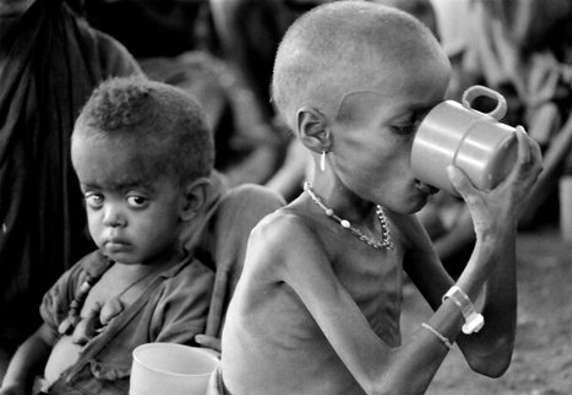
The image (Figure 1) shows the harsh realities of the Ethiopian Famine in the mid 1980s. This is an example of ‘poverty porn’ a concept that is used by development practitioners in the North that refers to the images where the poor are ‘portrayed as helpless, passive objects’ (Stuart 2006). The use of children in Ethiopia as ‘ideal victims’ are powerful and have the shock effect appeal. The image focuses on the ‘raw realism’ of suffering showing ‘depict human bodies in an extreme state of starvation… they are half naked, exposing emaciated rib cases, arms and legs’ (Chouliaraki 2010). This does not reflect real human bodies, so the global north often associate Ethiopia with this idea of tragedy. Those suffering lose their sense of humanity and dignity. This also hinders long term development as the global north does not have a true understanding of the political injustices and forces behind the real causes of their suffering. The Red Cross also often use these types of images as they generate the most revenue from donors’ short term. The use of ‘poverty porn’ is also further criticised as it fuels ‘compassion fatigue’ as people often feel powerless and feel the issues are beyond their control and therefore become ‘numb’ to these images that dominate the media reports of the developing world.
Art Representations of Ethiopia
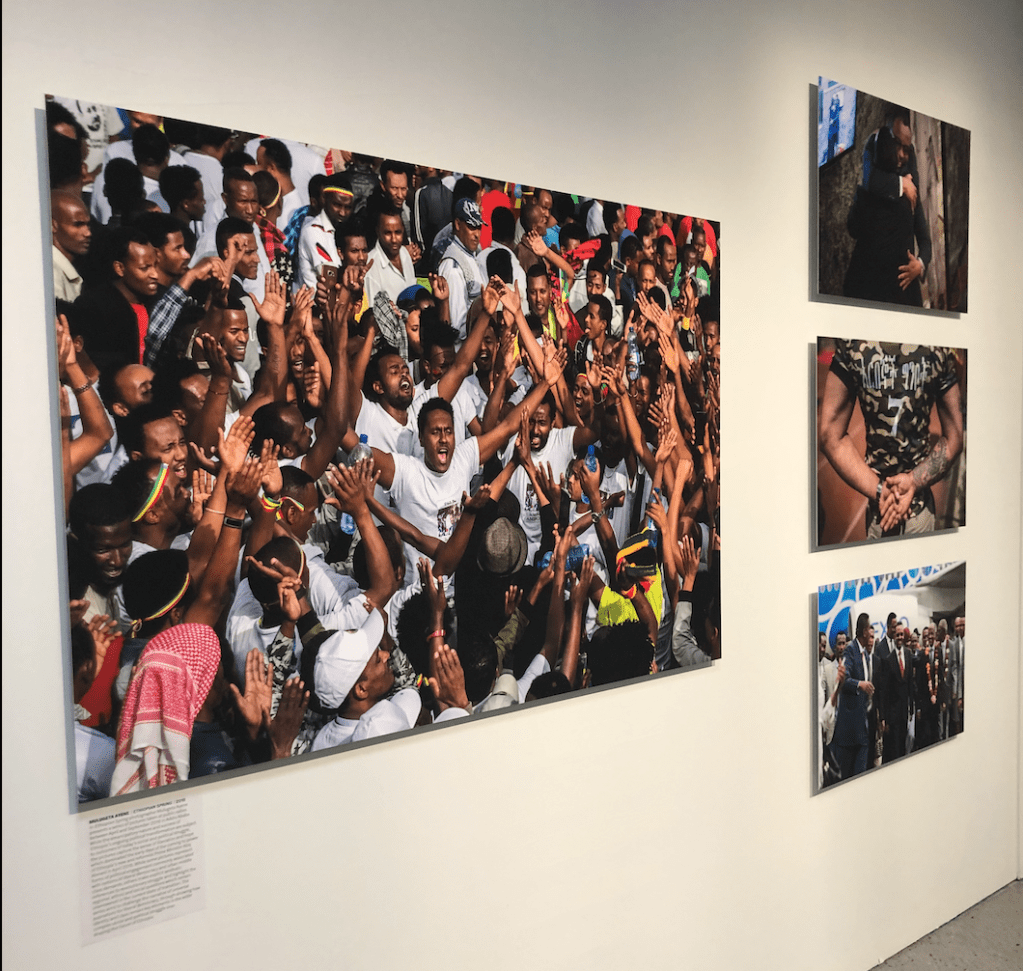
In contrast, the developing country Ethiopia can be portrayed in a positive light that challenges these negative stereotypes that have been ingrained as early as the 11th century AD (Ponican 2015). Figure 2 is an example of how in particular art can shed a different light on Ethiopia. At the Nobel Peace Prize Centre the exhibition ‘Crossroads Ethiopia’ by photographer Giles Duley shows the work the PM Abiy Ahmed Ali has done to reform his country and create peace with neighbouring country Eritrea. The photo shows the celebrations in 2018 of the Eritrea – Ethiopia summit agreeing to peace after 30 years of conflict.
A study about the use of art in development points out that artistic representations of the developing world, ‘brings character to a society or social group’ similarly that art contributes to ‘social cohesion and peace building’ (Strupples 2015). Figure 2 shows a political revolution, this success story empowers the people of Ethiopia and gives the people more personality that the Global North can relate with. These types of photos address the ‘evils of shock effect appeals’ (Chouliaraki 2010). People in the Global North who may have donated in the past during the famine may feel they had an impact in helping the country alleviate from their poverty and may incentivise further donations to other developing countries and to other parts of Africa. Figure 2 suggests a move from ‘Afro-Pessimism’ to ‘Afro-Optimism’ showing Africa on the rise. Rejecting the dominant discourses of Ethiopia as a country of despair and poverty. Many choose to represent Ethiopia as a country on the rise and potential. However, in many cases this is criticised as it creates new idyllic stereotypes of Ethiopia when in reality poverty in many parts of the country remains. For instance, this exhibition could be criticised as it fails to show the remaining unrest and conflict in the North of Ethiopia.
Bibliography
Chouliaraki, L (2010) ‘Post-humanitarianism – Humanitarian communication beyond a politics of pity’, International Journal Of Cultural Studies, Vol. 13 (2), pp. 107-126
Ponican, J (2015) ‘The Persistence of Western Negative Perceptions About Africa: Factoring in the Role of Africans’, Journal of African Studies and Development,Vol. 7 (3), pp. 72-80
Strupples, P (2015) ‘Accounting for Art in International Development: Insights from Artists’ Initiatives in Central America’, (1) Making Culture Count. London: Palgrave Macmillan, pp. 228-242
Stuart, R et al (2006) ‘The Pornography of Poverty: A cautionary Fundraising Tale’, (1) Ethics in Action – The Ethical Challenges of International Human Rights Nongovernmental Organisations. Beijing: Daniel A. Bell, pp. 23-37
 Media Representations in International Development